Monday, May 6, 2013

I Can't Change the World

  When I was a little girl I wanted to make a big change in the world.  I wanted my name in the history books that I read in school.  Once I started to grow up my motto changed.  I thought to myself, "I don't want to change the world, I just want to make my life and the lives of those around me better."  One of the worse things about being an international studies major is that you study so much to try to completely understand the situation in different parts of the world, but at the end of the day, after all of your research and all of my thoughts, you realize you really can't change anything.  Life is more of one thing that leads to another and most world changers start out as only a group of people thinking and talking about an issue.  Very few of these instigators actually see a positive change in their own life time and even fewer of them are recognized for their contribution.

  Life is also very complete--as we all very well know--and it is rarely one thing that makes a direct change.  Thinking about the civil rights movements in the United States.  There were many books published and banned before any type of real change happened.  In the US Civil War, there were books and people that influenced a way of thinking, but no one thing stood out on its own.  Even Abraham Lincoln, who is credited for the end of slavery in the US, was rather pressured and a mire addition to a strand of actions that caused real change.

My journal as I use my book light to write
  Applying this back to my own thoughts and learning of the Middle East, I have been trying so hard to learn as much as I can about Jordan and our surrounding situations.  I try to learn about Palestinians and Israelis and trying to keep my own biases out of everything I see and trying to find both the black and the white of all people while allowing my opinions to be constantly changed--but at the end of the day, I don't have any type of control over what happens next.  I'm merely as student in this foreign country.  I see all the things I don't like about Jordan and I complain about them all the time, but my complaining has little to no affect on actually changing anything.

  I watch as Bahrain has been in a civil war now for over a year and every night the population gets tear gases while the world is oblivious.  I learn about all the devastation in Syria and how 70,000 people have died in the past two years but nothing has been done to end it.  Iraq is considered a hazardous waste land after the war with the United States.  The vast majority of them are now refugees in other countries yet those who live there now live in a constant reminder of the horrors of the US's search for weapons of "mass destruction."  Palestinians face nightly curfews that can prevent them from even returning to their own homes in their own lands after a certain hour or they simply get refused to travel out of their own city just because the Israeli soldier told them that they are not permitted to go to the next city that day.  Jordanian girls can live in constant harassment from boys yet they are too scared to tell their parents in fear that after finding out that she had contact with boys that they will deeply dishonored by her and perhaps even kill her for it.  I learn about all of this and yet all I can do is write in my journal and allow my emotions and my heart to bleed through the ink of my pin, not really reaching anyone.  I have to remind myself not to simply yell at my friends who I talk to when my heart is hemorrhaging.

  I remember back at home so many people that I know don't like to watch the news because it's rather depressing.  So many people are dying everyday but there is nothing that I can do to change it.  It's disheartening to learn about all the chaos and all the turmoil in the world so we simply shut off the news channels and just focus on our own little lives while the rest of the world runs through a moving obstacle course trying to stay alive.  In America it is so easy for us just to shut off the news but here in Jordan, the news surrounds us.  We can't ignore it because we're a little player trying not to get stepped on as the big fish dance or often fight.  The majority of Americans are more the scales of the fish getting rocked to sleep without knowing that America is part of a larger dance or fight.  We're ignorant of all that our country is involved in unless it directly affects us.

  But justly so.  Why should we study and know about all the chaos in the world when we have no control over it.  Life is a series of opportunities that come our way.  Sometimes we can create opportunities for ourselves, but rarely can we create opportunities that can actually change the world.  We cannot simply save ourselves.  The world has been in chaos long before we ever got on it and it will long be in chaos after we leave it. The saying goes, "Ignorance is Bliss."  Perhaps justly so.  What is better?  To be educated and feel the weight of the world on your shoulders and your hands tied behind your back not being able to do anything or to stay blind to everything around you and just look down at your own feet?  

  We all will forever be blinded by our own experiences, knowledge, and biases, but being blind shouldn't really be feared because it's inevitable.  I just feel like the wise and the courageous are people who are willing to constantly be learning and allowing their ideas of the world to grow and expand, yet, they need to be able to accept that the world is already in motion and there is only a few things they can really do to help change it.  The best men and women in the world are those who spend their lives trying to do good wherever they are--doing whatever they do.  By impacting those around us we impact the world.  Be open, learn, constantly be growing, know that you'll never arrive for there is no final destination.  Life is more like a ride.  We don't go on a roller coaster just to get to the end (at least not if you enjoy roller coasters) but instead we get on to just enjoy it.  Learn, grow, and pass that information on.  Help those around you.

  One of my close friends e-mailed me one day and started explaining her thought on how so often the good deeds go unnoticed--meaning, that there are so many good deeds happening around us that we never hear about them.  We never know about the good things that others do for others because the good hearted don't do it out of a desire to be recognized, but out of a desire just to contribute to their world.  Whenever I get into thoughts of all the chaos I like to remind myself that in the midst of everything, there is always good.  Our world is a two sided coin.  For as much evil there is as much good.  It's just a matter of which side we choose to focus our energy on.  We should know both sides of the coin and by doing so we will feel more peace. 

These are just some of my pillow talk.

Tuesday, March 19, 2013

Democracy in a Tribal Community

When I was planning to come to Jordan I was largely motivated by the idea that studying a culture through books is one thing, but living in it is completely different.  This idea has played to be very true. One of the major ideas that I have studied about this region before I came was the political mindsets here.  I remember studying it and thinking, "That makes since" but now that I'm here I has an even higher understanding of the different ideas.

Background information.  Jordan is kingdom.  It has a king and although it has elections for members of parliament, the majority of the people here are highly devote to the king.  As any google search will tell you, the Hashemite Kingdom of Jordan was created after the first World War when the Middle East was split up into the present day countries.  The Hashemite family was given authority over the country and they still rule it today.  Pictures of the king and his family are everywhere.

King's picture over a Baptist School's Auditorium 


There are pictures of the king in nearly every place where people meet: theaters, offices, businesses, billboards, entrances to establishments, any government office, any university...  There will be pictures of the king eating when you go to popular restaurants.  When I go on trips I like to play "count the king" with my friends where we see who can find the most pictures of the king on our trip.  Included with the king might be a picture of his father and oldest son as well.  At first, it felt awkward having the king stare at me ever where I went.  Coming from America, I was not use to this public display of appreciation--for anything real--so it felt a bit overwhelming, but through time, it became normal.

The public have a tremendous respect for the king.  Although you might friend citizens who might speak ill of him, you will find many more that have his family picture as the background of their personal computer.  It is not required to hang pictures of the king everywhere, but out of pure admiration the citizens do it.  Sometimes citizens will also hang up pictures when their business is in trouble hoping that they might get assistance from the king if he happens to come by.  

Despite of all of this, the king is at large absent in the daily lives of people here.  He is more or less a ghost figure, a legend, or a rumor.  If he goes into a restaurant, people in that restaurant will talk about it for months, but when there was a major gas crisis last fall which lead to major protest, the king was no where to be found.  I remember feeling a void during this time.  In America, if anything major happens, I would expect for the president to get on public television to address the country.  Although he might not say anything of true value, it was comforting to just know that he was there knowing the concerns of the people.  

At the establishment of the modern Middle East, less then 100 years ago, the Middle East was made up of tribes.  There were constant tribal wars and honestly these alliances and tensions are still evident in the populous today.  Once modernity broke in this area, a mixture was created between the old tribal lifestyle and the "new era of democracy."  This mixture has created deep ruts that have been hard for the population to overcome.  This past January, Jordan held it's parliamentary elections.  Leading up to the elections there was a surplus of signs that cluttered every road in Amman.  Unlike America, where the race last for a year or more, here it only lasted around 2 months.

Before the parliamentary elections, the University of Jordan held its student elections for its students.  To my amazement, the University's election completely foreshadowed the elections that I would see in the fallowing months.  Before the campus elections, there were thousands of fliers posted at every gate and walk way.  Some students even had 30 foot tall posters that hung off the side of buildings promoting their canadidancy.  Every guy running for office had some type of glamour shot on every single poster and every girl had some type of graphic design that would catch the eye.  Posters and papers cluttered every inch of the university.  

On the day of the university elects, when I went to class, I found police officers at every gate entering the university.  After class finished my professor advised me just to go home to avoid any violence that would break out.  From years experience, students who ran for office and lost would often get offended at their failure and it often turned into a huge tribal fight after the results came out.  One student would say something to another and instead of it being one on one, family defense brought the whole clan in on the dispute.  But this display of tribal patriotism is not the only one at the university.

In the past four years the University of Jordan has but put a huge fence around their campus with security gates at every entrance to try to cut back on the number of tribal fights.  Every student is required to swipe their ID cards to get into the campus--especially the men.  (Being a female foreigner I can often just act like I don't know what they are asking for--only speaking English, not Arabic--and they let me in.)  These efforts have not completely stopped the problem.  In the fall I expected at least one fight every two weeks.

Returning to the parliamentary elections: from those who I talked to, it was quite predetermined who people would vote for.  They should vote for the member of their family that was running.  On the day of elections I was able to go with a friend to vote.  After driving around in a mindless inquiry of where he should vote, we found a school tucked into a neighborhood.  We had to walk about the length of a block and the whole time I had, perhaps, a hundred people handing me fliers with more electoral promotion.  Once we were inside the gate of the school, we were approached by many people to go and meet the candidates that were waiting outside of the school.  We then had to show the election card as well as the National ID to get into the school.  Girls and guys were then separated to go to different rooms to cast their vote.  My friend was male, so I fallowed him to the men's section.  He then signed in again to wait his turn to vote.  All of the men who came held their heads high actings quite proud of themselves for being an active member of their community.  Most of the men were older-higher classed citizens (but this might have been influenced by the place where we went--it was a nicer neighborhood).  When my friend turned in his ballot, he then had to put his finger into ink that stained his finger for the week.  A few days after the votes were counted, I heard canons go off in celebration for the victory.

Being here has greatly changed my idea of what it means for there to be democracy in the Middle East. As an American it is easy to think that democracy would be best for everyone, but in some societies I question this idea.  Just because it works in America doesn't mean that it will work in the rest of the world.  When explaining it I always talk about how in America we are all immigrants.  The majority of us have little to no generational ties to the land where we live.  The people who had lived in the land for thousands of years have been frequently uprooted by different forces which has eventually weakened their emotional connection to the land.  Most Americans are not aware of their extended family beyond cousins and such.  I know that I have no idea who my mother or father's cousins are.  Once grandparents pass on, the connects die with them.  This is completely different.

Families in Jordan have been around since the time of Christ.  Generations of history and memories tie people to their land.  Families are not just mother, father, and children, but a clan.  Children grow up in the same land where their family had lived for hundreds or thousands of years.  Children are born and raised, then continue on the family business whether that is farming or herding.  The threat of industrialization or relocation completely corrupts the mindset of the region.  This is one reason why the creation of the state of Israel has left such a huge wound on Palestinians.  Even today if you ask a Palestinian teenager where their homeland is, they will tell you Palestinian--even though they have never even been there.  It's ingrained in the identity of the people in a way that I feel is incomprehensible to westerners looking in from our western view point.

As I said, trying to bring the two mindsets together has caused many problems.  It has caused a weak false sense of democracy.  Not from the side of the rulers, but from the community.  There can be no democracy when people feel obligated to vote according to their family name, not the quality of the candidate.  Even people here will acknowledge this dilemma but its challenges still stand strong.  It will be nearly impossible to try to remove the mindset of strong family connections here but I don't think there is really a need for that either.  The tribal mindset is in many ways the strength in this region.  There is a huge emphasis on knowing your family and the idea that everyone belongs to some family or group.  Women do not change their names when they get married and orphans are prohibited from accepting a new last name just to preserve the true patrilineal bloodlines.  

I have heard stories about how some tribes have their own newspaper and their own websites.  I have also heard about how some families get together once a month just to share family news.  They all put money in a pot and give it to the family members who are in need.  People here take care of their family  both immediate and distant.  No one is ever allowed to feel lonely or alone.  There is always a support system and there is always someone to talk to.  It is the strength of the area.  If you meet one person, they'll introduce you to their whole family and you then have an entire family at your side.  This just limits our idea of democracy.  

Tuesday, March 12, 2013

Finding Balance--Externally

I have talked before about finding balance in the expectations of oneself while in a Middle Eastern country.  Being a western female here, you feel like raw meat on display--but you get even more attention than the butcher shops do here.  Today a friend and I went for a walk and we were told about two older gentlemen who completely turned around in their step to watch us walk pass them.  It takes "turning heads" in a completely different level but unfortunately not in a respectful one.  First as I wrote about before, it was hard to understand how I was suppose to see myself and allow other to see me, but now my balance have altered from an inward measurement to an outward one.  I struggle now with what should be the appropriate expectations that I should have toward the culture that surrounds me.


If you look closely, you will see a cross of an Orthodox Church and the Crescent Moon of a Mosque.

This is something that I have been observing for several months.  At first, it is so easy to "vent" to your westerner girlfriends about the problems we face here, but eventually the "venting" never stops.  Anytime you get westerners together, especially girls, the conversation will become about the negative aspects of this culture.  We will talk on and on about the lack of self-control we find in men and the complete control we find over women.  When talking to locals at times I have to simply walk away before I take out all of my frustration from the culture on one person.  When men share with me their idea of who and what women would be, my empowered spirit within me raises up.  When I hear a Muslim decides to show now tolerance towards another faith, my spirit roars within me.  When I finally acknowledge that it's not just men who confine women, but instead a shared mindset that both men and women share, my spirit quivers.  I never want to be the person whose eyes are too narrow to see the truth that is placed before me or too focused on the focal point to see all the details that make up the picture.  We all see life differently.  If I try to force my view point on those around me, or simply substitute the way women here actually think with the way I think they should perceive life, I am no better than those who make me feel guilty for not covering my hair or for wearing tight clothing.

A normal day wearing the Nacab
It's easy to get overwhelmed with the bluntly obvious problems.  It's even easier to over generalize all the people from this culture and simply clam up where you do not see anything else.  So many foreigners that I meet here do just that.  They see the bluntly obvious things and they are never able to really move on from them.  They learn how to make their lives as comfortable as possible here and they just look at the rest of the people through their colored lenses comforted in the idea that they have it all figured out.  If I allow myself to eventually stop trying to learn from those around me and simply categorize the experience that I have had here as another entry in my mind, then I feel like I will have become the thing that I have always run away from.  I want to build understanding and cultural exchange--not allow myself and others to simply put other cultures on the shelf and say, "That one's nice" or "I don't like that one" or "Of course I know how women there think!  They think just like I do!  I'm a women."

I do not mean to say that the blinding light should be ignored.  It can never be ignored, but I refuse to allow myself to to stare at it mindlessly.  Just like a car driving past you at night with its bright lights on, you should always acknowledge that it's there, but not focus on it.  Look for the smaller lights that are trying to shine and work towards them.  If you go towards the blinding light, there will be no compromise or understanding, only a crash.  In a none metaphoric way: I remind myself to not just look at the people who speak only out of their culture, but try to search out one people here that are good and true.  This doesn't mean that the negative aspects of the culture aren't bluntly obvious--they are--or that we shouldn't acknowledge them acting like the don't exist.  Instead, we should inspire the good qualities that we find in people here.  We should encourage them to rise above the struggles that they face and perhaps one day they might even raise above the mindsets we find so appalling.

Culture being passed on at a Christmas Eve service.
People are undoubtably formed by their community.  Our culture is instilled in us from the earliest age.  We are taught when to say please, how to wash ourselves, how to share, what to think of others, how to treat women, and how to treat the outside world.  Our community has such a huge affect on us and we will never be able to escape it.  With every person I meet here, I need to acknowledge that their culture in ingrained in them to the deepest core.  Every person--but instead of looking at this core and shunning it, I feel like I should aways remember be constantly trying to pull out the good qualities that I see.  I should be culturally sensitive when we don't agree--not allow our disagreements to make us stop the way of communication between us.

I am reminded of a Muslim friend that I had back at home.  He and I never saw religion the same way and it would constantly come up in even the simplest of conversations.  Regardless of our constant arguments, the spirit inside of me pushed me on to continue our friendship in order to--even in the smallest measure--build a bridge.  I cannot control what other decide to make un-alterable, but I perceive that with enough time and enough trust, even the unalterable things might become a matter of discussion.  I do not set out to convert the whole world.  Just before I die, I would love to see some of these strongholds between our cultures start to tare down.  The Berlin Wall eventually fell.  The Great Wall of China has been taken down in many places.  Just like a physical wound, it takes a lot of time to completely recover.  It takes time and time again of treatment with small improvements and often set backs, but eventually, it can heal.  

Housing around the University of Jordan ساكن قرم الجامعة الأردنية

I have had the pleasure (or perhaps burden) of changing housing multiple times in the last six months while in Jordan.  When I first came to Jordan, I had the intentions to stay with a Jordanian family.  Within two weeks of being in Jordan I was told that it was "culturally inappropriate" for me to be with this family so I was asked to leave.  Unfortunately, it was too late for me to be able to find any roommates that were studying at the University of Jordan such as myself, so I had to wait until the end of the semester to find roommates.  This meant that I had to buy a place on my own and carry the burden of paying for it completely alone and settling with the over priced "left over" apartments that weren't already rented by the students who were already settled in the area.

I was asked to pay 200JD a month for food and utilities and to help the children learn English with my host family.

I quickly moved into a all girls hostel that was located closer to the University of Jordan.  When I moved in a was shocked.  Being an American, our standards of housing just did not quite compute the expectations that I found here.  I found myself saying, "This is good, for Jordan."  I always tried to keep in mind, this is considered a developing country and there are reasons for that.

At the hostel I paid 240JD per month for a studio.

Roughly two weeks after I moved into the hostel, I simply couldn't keep the eleven o'clock curfew (because I was new to the country and I wanted to explore and because in my room, I was completely alone) so I found another place to stay.  I called a number that led me to an apartment searching company that charged me 10JD to take me around to look at these horrible apartments until eventually I was forced to settle paying much more than I was able to pay.  If you are a foreigner looking for an apartment, I advise you to try to take a local with you.  They are much less incline to cheat you and it makes the process a lot smoother.  

The one-bedroom with kitchen/living room was 250JD per month. 


I lived in that apartment for a couple of months until they extended to increase my rent up to 300JD so I moved into an other apartment that was quite unsatisfactory but cheaper.  I told myself that it was only for a month until the end of the semester ended so I could look for something closer and better.  It turned out that the apartment that I was living in was actually originally part of the apartment next door that was cut into two separate apartments.  I had no way to cook food and the provided mini refrigerator smelt so bad I refused to use it.  Several pieces of furniture were broken in the apartment.  If I wanted hot water, I asked my neighbor to turn on the  heater for me to take a shower.

This whole in the wall bedroom was 170JD per month.

During one of the biggest snowstorms in Amman, my rent was up and I was told that I needed to leave.  The land lord said that I could stay in the apartment if I paid 100JD per week, or if I paid 25JD per day.  Thankfully, I was able to move get a taxi and moved my stuff to a friends how.  I was able to piece together a place to stay until the week I was out of an apartment.  Really, that snow storm was one of the hardest times in my life.  Perhaps later I will feel more comfortable speaking about it in detail.  Thank you everyone for being there for me!

Staying with American friends...0JD--only worlds of appreciation.

I then went house hunting again.  Really a drooling task in this part of town.   I have heard in other parts it's different, but here around the University of Jordan, they require quick decisions.  You have to decide if you want the apartment within a couple of days (and sometimes only hours) or else you will miss out on it.  You must have all the money upfront or you can't get the apartment.  You should expect to have to pay at least 50JD deposit and at least 5-25JD to the guard of the building (plus the rent and bills) up front.  As you could imagine, my housing controlled my pay checks for the past six-unstable months.  Thankfully I found 2 other wonderful roommates and an wonderful apartment near the University of Jordan that the three of us could share comfortably.  We all have our own rooms and we have internet 24/7.


Sharing an apartment with others is around 150JD each plus around 12JD for everything else.

Now I want to share some expectations that I feel one should have when they go apartment searching here.  

What to expect from furnished apartments from around this area:
  • No central heater or cooling (unless you like to pay way to much money)
  • No dryer
  • Only semi-automatic washer machines (if you get a fully automatic one you're blessed!)
  • No shower curtain
  • No electric plugs in the bathroom
  • Light switches will be outside of the bathroom
  • There will be a dubai next to every toilet or a sprayer
  • A limited monthly allowance of water
  • Only gas stoves that are connected to a propane tank
  • There will be a TV with over 400 channels (for free)
  • The apartment will not be cleaned before you move in
  • There will only be limited dishes provided
  • Your apartment will come with an ashtray 
  • One if not many of your rooms might be painted pink (it's so popular for some reason)
  • Most likely your furniture will not match
  • Most beds are twin size or they push two twin size mattresses together to get a "queen" size
  • There is not fire escape plan
  • There is no insolation in the walls (so super cold or super hot)

Monday, March 4, 2013

Where the Old Meets the New: Marriages Engagement

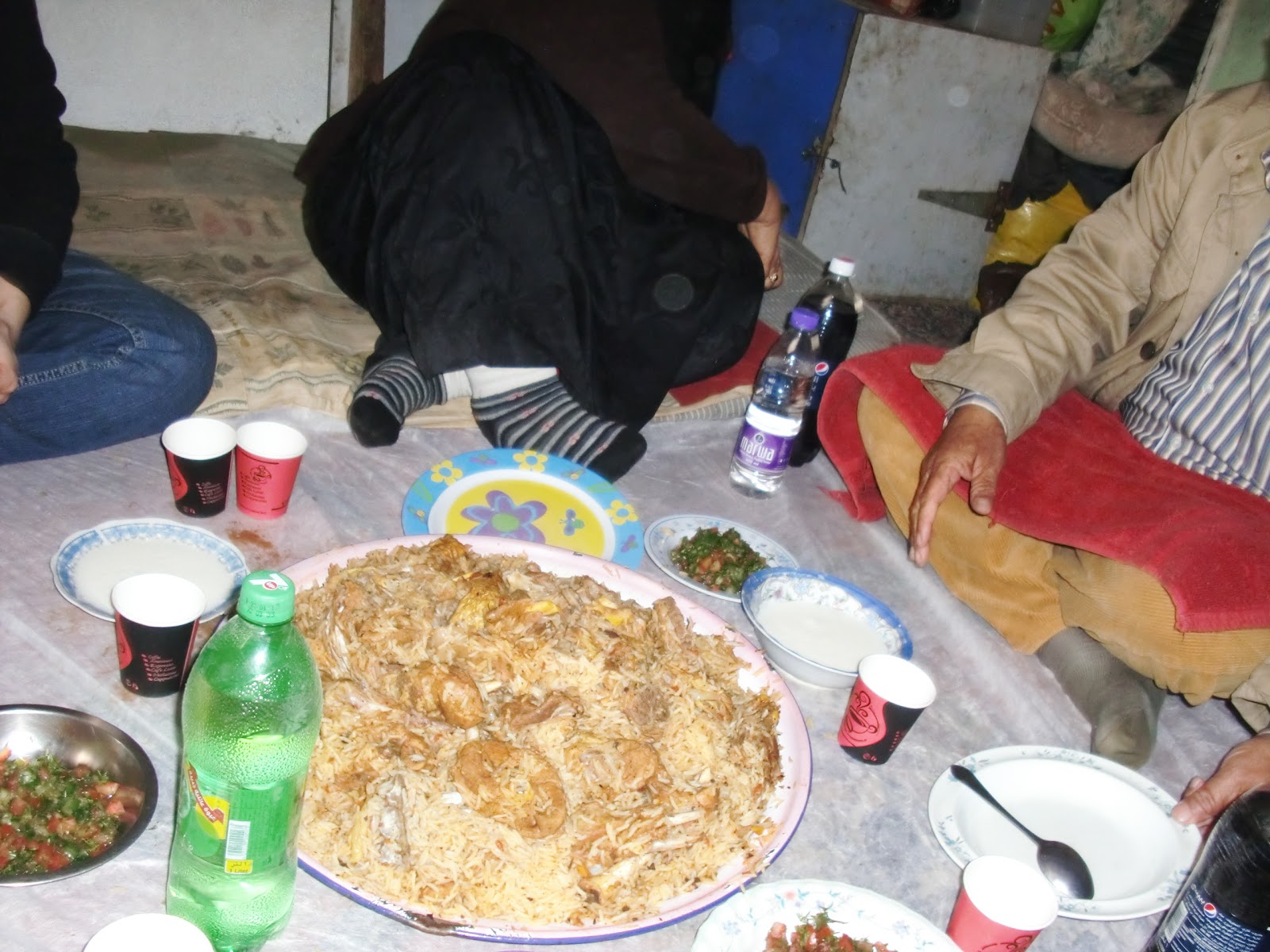
In Jordan you will find yourself at a cross bridge in cultures.  Cultures from all over Asia and Europe can be found here.  I know so many stories of "My mother is American/Greek/Russian and my father is Jordanian" or "My mother is Jordanian and my father is Palestinian/Saudi/Kuwaiti."  There is a huge mix of nationalities and so many different styles of life here.  Some people sit at a table and eat dinner from their own plates, others all sit around a coffee table and eat from one big plate or individual plates, yet others sit on the floor and eat with their hands.  It changes drastically from the people who live in the city as to people how who live in the small towns or villages.  You take an hour ride outside of the city and you hear completely different ways of speaking.  You see new ways of dress.  On the streets of Jordan you see people dressed like they just came from America to those who wear traditional dresses and head coverings that have been worn for thousands of years.  Usually, from the people that I know, the older people are the ones that choose to be more traditional and the younger ones are the ones who choose to have a more contemporary lifestyle.  I have heard stories of people who lived contemporary lifestyles when they were young, but at a certain point, they changed their life styles and became traditionalist--from the stories that I heard, the determining factor is the age of marriage.  Marriage is where tradition and modernity meet and often clash.

Contraer to what parents in Jordan like to think, the majority of young people here have or have had some type of romantic relationship.  Although, unlike American culture, there relationships have been highly confided to meeting at the university and by calling them at night or messages on Facebook and  on the phone.  Many youth will save their boy/girlfriends number in their phone as a different name just in case their parents over see it.  While they are at the university they spend as much time as they can talking to each other and enjoying a meal or snack under the trees while sitting on the street curb.  There are places on campus where you can expect at any give time to see at least three couples relaxing.

A quick note--in public schools in Jordan, the two genders are completely separated.  You do not see someone who is your own age besides your relatives until you go to the university--unless you attend private schools.  The university is usually where most students experience their first co-ed classroom setting and it is there where relationships really start to flourish.  Here, the genders go to a great extent to separate each other and parents go to even greater extents.  Although there are only a few laws that really separate everyone, the culture creates these rules.  For example, it is not illegal for a man and a women to live together if they are unwed, but, if a family says that the man kidnapped their daughter, the girl will be forces to return to her family by the officials.  Before that though, many landlords will not rent out apartments to unwed Jordanian couples just to protect against these occasions or because of their own ethics.


Most relationships that I see here are comparable to relations in middle school from the US.  Feelings get easily hurt if you do not call or text every day.  They talk on the phone for hours each night after their parents have gone to bed.  Most interaction is done in secret.  Some girls will even take off their vail and show their hair to their boyfriend while on Skype leaving the parents to think that she's only on Facebook or on the internet browsing.   Overall, relationships are overly exaggerated--but to the couple, this is how you show true appreciation for the other person.  They are your "love," your "life," your "pet" at least for the time that you are in that relationship.  Unfortunately, as most middle school relationships, they come to a close after a few months or perhaps up to a year and the couple is left with all types of emotions.  As one of my friend said, because so many relationships are done only cyberly, no one really grows to know the other person and they usually end in disappointment.  Unlike America, people often grow very-very attached to their relationship and it often leads people to obsession.  I know a friend who has a boy constantly calling her or messaging her even though they broke up months ago.  Of course not every person takes part in dating here.  I know guys who feel like it's disrespectful to his sisters and parents if he goes again traditions and participates in dating.   Now, on to the engagement period.

The typical story for a 20 year old girl in Jordan is as such:  "I want to graduate from my university and get married.  Once I get married, I will have children and I will teach them how to be good people and then I will be proud of them and proud of my self."  When a girl goes to the university, she is focused on her studies, but once she graduates, she simply sits around and waits to get married.  Often parents do not support their daughters to get graduate degrees.  That's something that their husbands should support.  Once girls graduate, they either sit around waiting for a suitable husband to come purpose to them or they search for work.  Work is hard to find here-espeically for young women.  They usually only find work as a secretary or receptionist.  Even then, because of the unemployment rates in youth, it's even harder.  Most girls are just sitting at home waiting for their husband to come to 'set them free.'  Girls are given around 10 years to get married.  If she does not marry before she is 30, she can be thought of as unsuitable for marriage and may never get married.

Men, on the other hand, commonly get married around 27-29 years of age.  There is traditionally a 5 year gap between a husband and his wife.  Men usually have to wait to get married in order to save up money and to allow themselves to become more established.  Marriages cost huge amounts of money here in Jordan.  Depending on the family, they will require the man to pay large amounts of money for the wedding and towards the bride.  I've heard stories where the brides family wants at least 10,000 JD for the furniture, 5,000 for gold for the bride, and he must own a car and an apartment.  Now, a fresh graduate out of college will not be able to cover these cost, so typically, the father of the groom will help support the groom in his marriage while leaving certain cost up to the groom himself.

From what I've heard, there is an even larger expectation in the Christian community then there is in the Muslim community.  According to Islam, a Muslim man is allowed to marry a Christian women, but a Muslim women is not allowed to marry a Christian man.  It is partially because the offstring of the marriage should be Muslim.  No Muslim family will permit their daughters to marry a Christian, and in comparision, it is highly taboo that a Christian family would permit their daughters to marry a Muslim.  The two groups are greatly divided in this aspect.  This creates great generational religious divides.  People from this region are typically able to tell your faith according to your last name because families are known for being either Christian or Muslim.

Traditionally, if a man is ready to get married, he will send his mother out to find eligible candidates and they will go around meeting the different girls.  Now, it has become more common for a man to ask his parents to purpose to a girl that he met at the university or through friends, but the traditional way is still in practice.  The hard part about the new age of meeting someone before you marry creates problems if her family rejects his proposal to marry her.  I know of a couple who had been together for 7 years but when he purposed to her father, her father refused because of his finances and because of his ethnicity--he is originally Palestinian and not Jordanian.  The girl ultimately gives the final "yes" or "no," but no girl would disrespect her father or mother by going against their opinion.  This would cause great disrespect towards the girl and towards the family. It might even prevent the girl from ever getting married.

Continuing with the tradition, they are given 3 meetings to decide if they want to get engaged.  Then they usually have a year or so before the wedding to make preparations and for the couple to really get use to each other.  According to Islam, at this time, the couple is technically married so he is allowed to see her without her vail, but they do not consummate the marriage nor live together until after the cultural celebration.

Do to my own age, many of my girlfriends are at that point were they are eligible to get married.  One of my friends disclosed to me that she was getting purposed to.  I asked her to explain to me how she felt about the situation.  She said that it was all just overwhelming.  She had been sitting at home for a long time so she wanted to get married, but the idea of getting married to someone that she had never met was very frightening.  Anyone can put on a front that he is a good guy until you get married.  Although there are marriage contracts where the girl can require anything out of the husband, she doesn't want to scare the guy away by demanding to much.  If she turns too many guys down then she is thought to be unsatisfiable and her parents might start to think that she has outside relations which gave her such high expectations--therefore, she is a bad girl.  Some parents might even make their daughters marry just to get them out of the house and to get them out from under their financial care.  Thankfully, that is only in the extreme cases.  But sadly, many girls are forced to marry someone that they do not love because the guy that they loved while they were dating was not allowed to marry her.  It creates so many different clashes between the new-modern mind of love and romance, and the traditional ideal of commitment.

While discussing this matter with an American friend, we said that these traditions can't be completely devastating to all.  It has to work for some or else they wouldn't still do it.  I had the pleasure of meeting a girl who is in her final year at the university and who is currently engaged, expecting to get married this June.  I asked her how she felt about it and she said that she was very excited.  "This time is boring waiting to get married.  I'm excited to get married and to be able to live with my love."  They have been engaged for nearly a year now and everyday they talk on the phone and chat through messages.  Most people tell me here that in the traditional way of engagement, love will fallow.  They think first and then feel second.  First, they think about what they want and what they really need, then after time, they will learn to love each other.  There is no lack of commitment in this style of engagement.  Unlike American relationships that break up and leave unending amounts of pain and problems in couples, these relationships are only begun under the contract of commitment.  They do not allow for broken hearts--only assurance.  Of course as in American engagements, here in Jordan, engagements often break up if the couple realizes that they can't ever work well together, but typically the boys that are more patient and caring are those who choose the traditional marriage style here.  Time has a way of working things out in a person's life where they become better suited for marriage.

For all my girlfriends here, I just pray that the perfect guy comes along and redeems her from the life in the home and helps her achieve her own dreams that she has in her life.  

Monday, January 28, 2013

Finding Balance

    One of my friend reminded me that I need to update my blog.  Usually I like to write about something that I've been thinking about lately but it seems that I just haven't taken the time to actually sit down and write, or I'm really distracted that I can really sit down and write down all the thoughts I have had.  I Skyped my mother a week ago and she was so upset at me because somehow, I hadn't really talked to her since before Christmas.  This last month has just been so crazy and I know for sure that I have picked up the Arab sense of time even more than what I had before.  Although there are still the same amount of hours in a day, there are less hours of sunlight because of the winter and it's really cold due to poorly insulated housing.  I started to take online classes through OU this semester and I was shocked at the differences in pace that I use to work at in the States as compared to now.
My last visit home before coming to Jordan

  That aside, the time of balance that I want to discuss isn't a matter of time or calling home, but rather a behavior balance when it comes to culture.  I have felt like I was stuck somewhere between worlds for almost two years now.  I have had a passion for the Middle Eastern culture and have made many Middle Eastern friends, but at the same time, I'm fully American with no Arab blood.  My family has little to no Arab influence besides the news channel and myself.  Therefore, whenever I'm home, I'm expected to act as an American, but when I'm with my friends at the University, I'm a mixture of American and Arab influences.  It was only once I went a broad that I could really understand what it meant to be American but I know from being here that that is my foundation.  I'm not of Arab decent so any amount of culture that I have absorbed of Middle Eastern culture has all been acquired through learning.

Mariam (Iraqi) at Galveston, TX
  In America my friends were largely Middle Eastern but one of the first things I realized was that they are Americanize Middle Easterners.  (I say Middle Eastern instead of Arab because Arab is really an ethnicity that derives primarily from the Arabian peninsula but it is not that only ethnicity that is represented here.)  That means that although they appreciate and respect their own culture, they have also opened up to allow the American culture to be evident in their lives.  One of my dear friends from Iraq once had someone say that she was "the most American Arab" that they have ever met.  Because of their Americanization, I feel that many of the things that I did which would not be accepted here in the Middle East were perfectly fine being surrounded by my Middle Eastern friends.  We were in my culture and we were just influenced by both cultures.

Now, I'm no longer in my culture and I'm expected to obeyed by the culture and traditions here, no matter who silly they might seem to me.  My struggle has been where do I draw the line?  I'm American and I will always be American.  I cannot give everything that I am to completely adopt a new culture, nor should I have to, yet, I'm still here and I need to be able to be accepted here.  Before I came here this past summer, I spent a month or two making a video to introducing the Americans at my university to Saudi culture.  I completely loved it.  It combined two of my top passions, building bridges between the Middle East and America, and media.  I concluded the video with some quotes from two of the international students at OU.  They said, "When we came to the US, we took the better of the two cultures...Overall we would be the same...but it definitely gave us another perspective...Every experience that you go through is hard in the beginning but in the end you get stronger."

Ronia-American Arab at Petra
  All of my friends ask me how Jordan is and I always answer with the same reply, "There is good and bad."  At first, of course all I could see was the bad.  One of my American friends and I would always talk about the parts of Jordan that we hated most.  She decided to go home this past holiday session and as she went back to the States, I asked her to tell me what about Jordan she missed once she was back.  A couple of weeks after she went home she told me that the one that she missed the most was simply the people.  It made me think that although there is so much about the culture that I hate, there is so much here that I love.  So much culture that is here I cannot get back in the States, or if I do, it's very limited.  I have a heart for this area of the world and the whole time that I'm in the States I'm just thinking of this region, praying about it and wondering what I can do to make a difference.  That in itself is one of the best parts of actually being here.  Then of course, there are the cute children, the delicious sweets, great Arab food, the relax sense of time, and much more.

Rojeh showing off Im Qis
  The bad on the other hand is what I struggle with.  I was talking to another friend last night and I was explaining to him exactly what the good and the bad where and he just told me, "Tasha, I told you that it would be hard for you being a girl in the Middle East."  From my observations, it is so much better being a western boy coming to this area.  Boys are free to do whatever they want.  Many native boys have their own area of the house.  They can go anywhere and do anything anytime they want.  Their parents don't regulate their lives (accept marriage) as much.  Their parents give them money until they graduate college or get married.  Boys are the pride of the family.  They want their sons to be successful so that they can say, "Look what my son did."  Parents call themselves "Abu Mohammad," "Umm Mahmood," meaning "Father of Mohammad," and "Mother of Mahmood."  Therefore whenever a boy comes the Middle East, guys see him as cool and foreign.  Everyone wants to be his friend, take you out and show you everything.  Guys make friends so easily here.  They can meet anyone and enjoy their time.  Girls on the other hand are completely different.

  While a boy is the family's pride, a girl is the family's honor.  Honor is not flaunted like pride, it's preserved.  Girls are very protected here.  They are limited to keep the honor of the girl from being tainted.  When I first got here I had an American who I had never met come up to me as we were visiting friends and started explaining to me the different ideas that people here have of western girls.  She told me a story of one day she was walking with one of her friends and found chap stick in her pocket so she decided to put it on.  Her friend immediately stopped her and scolded her.  Her friend said that putting on chap stick was like telling all the guys on the street that she wanted to have sex and that she was a whore.  This American women went on to tell me that a women's honor here can only go down.  She is born perfect but through her actions her honor is tainted and diminished and it can never go up.  Being a western women, the expectations that are broadcasted through western media creates an even lower view of western women to begin with.  So many people here are completely shocked that I don't sleep around or that I have morals that they often simply reject the idea.  "I'm western, of course I do those things."   Arab men will come up to western women and make friends with them just in order to get something out of them.  So often I watch an outspoken western girl just talking about whatever and there is a group of eastern boys all staring at her and I can tell that they don't really care about what she is talking about, but they are thinking about other things.   I walk down the street and I get so many car honks and stares.

  Really, I feel like these thoughts and expectations have hindered my personality.  I love to dance and sing but here, if a girl dances in public she is a whore.  I went shopping with one of my friends at the mall and there was a fun song on in the elevator and I started to bob my shoulder and my friend said, "What are you doing!!!  You can't do that here Tasha!"  I love to sing randomly until my boyfriend told me a story about how a Jordanian girl was singing in his college of theatre arts and a man walked in and called her a whore just because she was singing.  I can't be sweet to people because that is a sign of weakness that they will either think things of me or they will try to take advantage of me financially.  Girls here walk around with pointed eyebrows just to look serious.

  Besides the expectations that are on me, it is also very hard to have friends here.  I don't want to be friends with boys because of what they already expected out of me, but girls are hard to come by.  Because a girl is the family's honor, she is expected to be home by 5 or 6pm even in the winter.  She only goes out at night with her family.  She is not allowed to be out with people that her family does not know.  She is not allowed to go out alone without a male chaperone.  Keep in mind that these are not laws laid down by the government, but cultural expectations.  Whenever I meet a girl that I would like to become friends with, she tells  me that we could only meet in the day time whenever she is at the university.  She cannot hang out with me in the evenings or on the weekends.  This has made it extremely hard for me to make friends.

Jaresh, Jordan
  At first I thought that I would just have to live up to all the cultural expectations placed on me to be a good girl.  In American, most people have not doubts that I'm a good girl.  They're usually surprised that I love heavy music.  Here, I'm western so they already have that wrong view.  I have tried to limit myself like any good Middle Eastern girl would do here.  I never wear any shirts that don't go down to my elbows, I wear scarfs to cover my chest.  I have not worn shorts even in the house.  I never smile while walking down the street.  I sit in the back of taxis without making a sound.  I ignore my favorite songs whenever they come on the radio.   I only talk to boys if they address me first.  I don't put out my hand to shake hands with a boy unless they do first.  I always sit up straight on buses and never look around.  I only sit next to women on buses, never boys.  I do all of these things just to prevent people from thinking things of me.  It has become a huge burden on me and honestly, I feel like a large part of my spirit has left me by doing these things, which hurts me.


  I know that regardless of all of these things, I want to be here and that I want to still work in the Middle East.  I still want to work on building bridges between this world and my western world.  I want to develop understanding and trust between the two, but if I am to do that, I cannot kill myself inwardly to just fit this mold that is laid out of me.  I know that I need to find a balance where I can still be American and enjoy life, yet at the same time be comfortable here in the Middle East.  It is my fun and loving spirit that reaches so many people for the better.  By having a sour face I will never be able to reach anyone, I will simply be one of the many.  I wondered a month a go if I could simply accept that some people will think of me as a whore.  They label nearly all open girls that way so really should it be a concern of mine?  People think silly things of me back at home through misunderstanding, but I have never allowed that to hinder me before, nor should I allow it to hinder me know.  I know that my spirit can't reach everyone, but perhaps I should allow it to show well enough to reach those who will be reaches.  "He who has an ear, let him hear..." Rev. 2:29

American Eagle in Taj Mall, Abdoun 

  At the same time, I have seen American women who come here and completely close off to the culture here. They never learn Arabic, they only shop at American stores and they only spend time at American places. They work for whatever reason that they are here and some even count the days until they get to return home. This is, in my opinion, is not the best attitude either. I believe that there needs to be some kind of balance. I need to be able to preserve myself and my spirit, yet at the same time, connect with the people here so I can learn from them. If I really plan to build any bridges, I have to be able to reach both sides. "A bridge is never build from just one side." This balancing act as most is a work in progress but what has been weighing on me the most lately. I pray that once I finish this year I will be able a stronger person who feels comfortable in both worlds. Perhaps then maybe I can start to build those connections between the two worlds.

Wednesday, December 26, 2012

Christmas in Jordan عيد الميلاد في ألأردن

Those of you who read my last post know that approaching the Christmas season in Jordan was especially hard for me as it is for all people who are away from their families.  All the Americans that I knew here who are Christians returned to the States to be with their families, but going home wasn't an option for me.  So many times going up to Christmas I had dreams of going home for the holidays then wondering how I was suppose to get back to Jordan.  But as I told so many of the closest people in my life, I know that being here is only the beginning for me.

This Christmas I basically only had my boyfriend, Rojeh, to celebrate with.  He is a Jordanian Christian but although his family has always put a Christmas tree, they never really celebrated like he grew up watching on TV.  I decided to try to make it the best Christmas for his sack as well as for my own.  

Here in Jordan, the only place that you can tell it's Christmas is in the international stores in the malls which send decorations to their Jordanian branches.  The university did give usa day off of school, but only one, and I have a test on Sunday so Christmas celebration was pushed back into the back of my mind.  Most of our friends who are still here in Jordan are either Muslims who don't really celebrate Christmas or foreigners who celebrated with their visiting family or with their close group of friends.  

Amman International Church
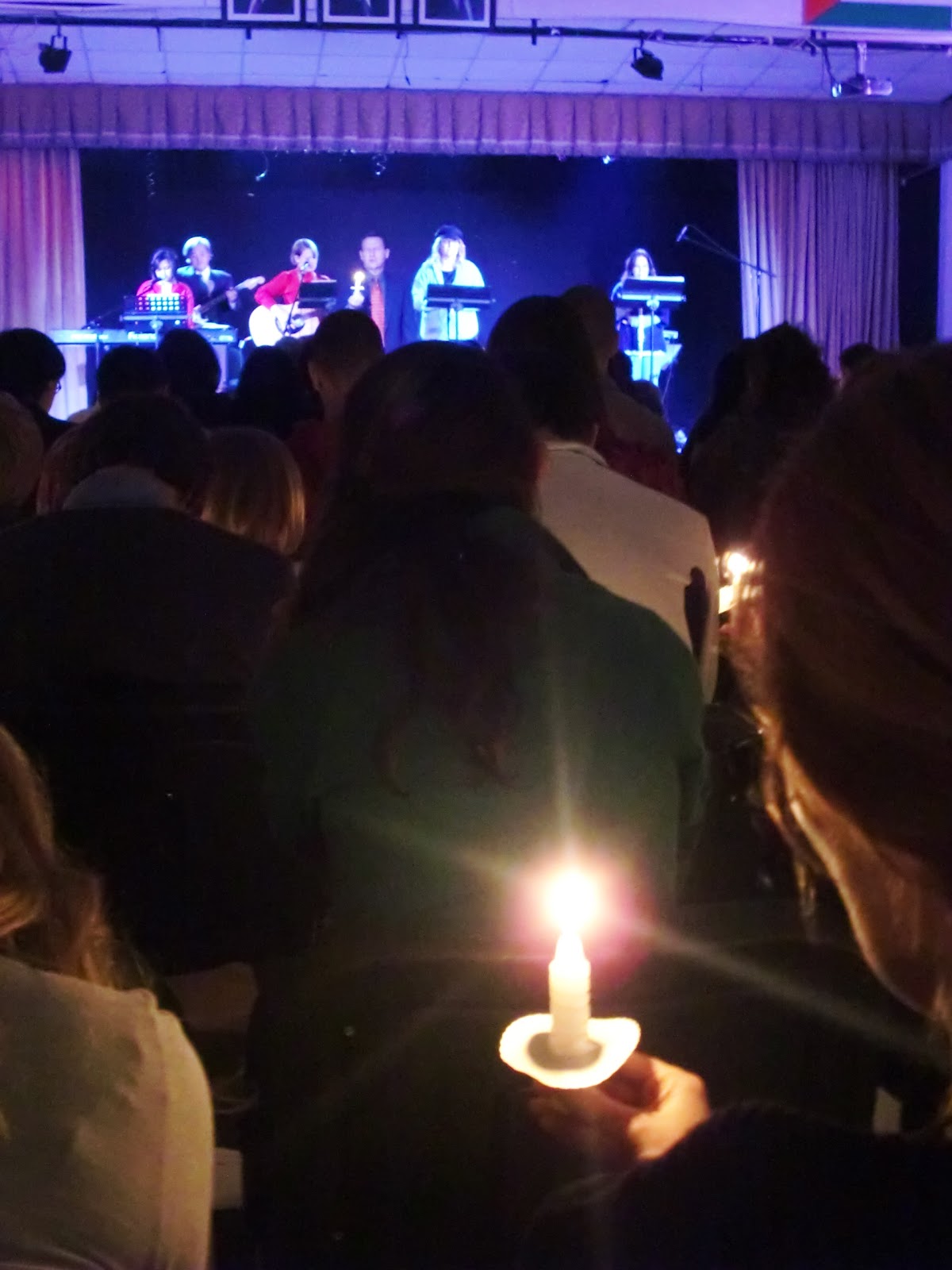
We went to a Christmas Concert in one of the 5 star motels in Jordan the Thursday before Christmas.  It was put on by the music academy Blue Birds which is owned by foreign Christians.  All of the performances were by a collection of foreign Christians.  It was the second concert of their that we had attended and honestly, their concerts always remind me of home.  They have such a loving spirit about them, but they always have the freedom in music which allows you to dance, sing, and have fun--something that I have missed the most when it comes to culture.  Then on Christmas Eve, we attended the Amman International Church's Christmas Eve service.  This church is composed of English speaking foreigners from all over the world who are living in Amman.  It meets in the Baptist School here in Amman and brings the central US church right here to Jordan.  This service was especially full.  It was such a blessing to see that I wasn't the only one celebrating Christmas in a foreign Islamic country.  We sang all the traditional Christmas songs and had a message about being like the shepherds that answered the call of the angels to visit the Christ Lord Jesus in Bethlehem that night.

After service, Rojeh and I went to the Christian town of Fuheis (الفحيص) which is located just outside of Amman.  Once we got to Fuheis, I could feel a completely different spirit.  We got off of the bus at the main circle in Fuheis and I saw people ringing bells and celebrating the Christmas spirit.  Instead of the Muslim call to prayer, there was the churches' bells and prayers filling the air.  There were people dressed up in Santa suites, as well as other costumes.  Even children were dressed up in Christmas costumes as they walked the streets with their parents.  Whenever they got to Santa Clause,  they took pictures and walked on merrily as the children has a hug smile on their face.  Santas were ringing bells, hanging out of the car door as the driver drove down the road honking his horn.    So many of the stores were covered with Christmas spirit and many of them even had nothing but Christmas decorations inside of them.  As we looked over the city, we could see multiple homes covered with decorative lights.  All of the traffic circles were covered with decorations--trees, tensile, lights, and even pictures of the candidates for the 2013 elections.  

One of the circles just up the hill from the church (cops to the left and St. George on the top)
The moment I got off of the bus, the first thing I noticed was the large amount of police officers everywhere.  Before we came, we heard rumors of all the troubles in Fuheis.  Traditionally, they put up a huge Christmas tree at the main circle where we got dropped off.  This year, there was only a statue outlined with Christmas lights that said Fuheis in Arabic.  The city didn't put up the Christmas Tree this year because of all the problems with the Muslims coming to Fuheis.  Because it is a largely Christian town, there is many more alcoholic stories then their are in Amman.  Many Muslims come to Fuheis just to drink because they think of the Christians as the free and liberal people (which compared to many of the muslims here, they are).  While they're drunk, they start to cause problems with the unveiled girls.  Of course in a tightly nit town, this causes many problems that break out into fights.  This year, there were cops everywhere.  They stood at every street circle (which btw--the main form of control for merging roads in Jordan--I see very little traffic lights here) and at the entrances of churches.

Traditions carry on
In our wanderings, we ran across an Orthodox church that was holding its Christmas Eve service.  I eagerly entered the services.   The Orthodox and Catholic churches are the dominating denomination of Christianity in Jordan.  According to Wikipedia, Jordanian Christians are some of the oldest in the world.  Here I saw people of all likes all celebrating Christmas in the traditions that have been passed down from generation to generation.  I sat there and listened as the choir sang the traditions of old as the priest prayed for everyone (all in Latin or Greek--I'm not sure which).  People walked up one by one to light a candle for different prayers after they kiss the face of a saint and pressing their foreheads against the image.  Women walked in and instantly put their decorative vials on their heads.  The man siting in front of me was holding his sleeping son which made me think of the years of tradition that had been passed down in this community for over two thousand years.

After several minutes we departed the church in search for the nativity that Rojeh remembered visiting before.  After walking around in the cold for several minutes, we found the location but this year it had been replaced with two new buildings which blocked the view.  It was no longer decorated.  It was interesting to me the amount of influence that was choking out the old Christian traditions slowly.  Rojeh said that there use to be several Christian areas in Amman, but now, Fuheis is the last remaining one.  Even though it is known as a Christian community, it still has a far share of Muslims which has made an influence on the locals.  It's not a matter of a decrease of Christians in Jordan, but an incredible growth of Muslims in Jordan.  While Christians might have three to four children, Muslims will have five to fifteen.  This causes a quick overgrowth that is drowning out the Christian population.  But overall, there was still a spirit of joy and festivities.  Before the end of the night, we went to buy great Arab sweets and ate them as we watched the Christmas Carol that we bought at the mall before my apartment.

On Christmas Day, I still hadn't bought Rojeh's Christmas present.  If I were in the States, it would have been too late to buy a present because all stores are closed on Christmas Day, but here, the holidays are the main days for younger people to go shopping.  I met up with one of my Jordanian girlfriends and went to our favorite mall with her and her siblings to search for Rojeh's present.  After a few hours her mother called her promptly to return home.  I bought Rojeh's gift and returned to my apartment because he had a Christmas party to attend with some of his male foreign friends.  I retired for the rest of the night to my apartment watching Christmas movies while laying in my warm bed.

For all of my family, I'm sorry that I didn't call you yesterday.  I didn't have internet connection, but I pray that you had a wonderful Christmas and that there was warmth in your hearts.


Additional Resources: